
For anyone choosing an off-grid lifestyle—whether in a cabin deep in the woods, a tiny home in the desert, or a homestead miles from the nearest town—water is one of the most critical challenges to solve. Electricity can come from solar panels, heat from wood stoves, and food from gardens, but clean, reliable water is the backbone of true independence. Securing a dependable water source often requires professional expertise, including drilling, installation, and maintenance of wells. Water well & well pump solutions ensure that off-grid homes have consistent access to potable water, whether it’s for drinking, cooking, irrigation, or daily chores. With the right system in place, homeowners can avoid the unpredictability of natural water sources, reduce reliance on deliveries or surface water, and maintain a sustainable, self-sufficient lifestyle. Properly installed pumps, filtration systems, and regular maintenance also extend the lifespan of the well, minimize breakdowns, and provide peace of mind knowing that clean water is always available.
Traditionally, off-grid water systems rely on wells, rainwater catchment, streams, or hauled water. But each option has limitations: wells can be expensive or unreliable, local water sources may dry up, and rainwater depends on seasonal patterns. This is where modern innovation steps in with a powerful new tool—Atmospheric Water Generators (AWGs).
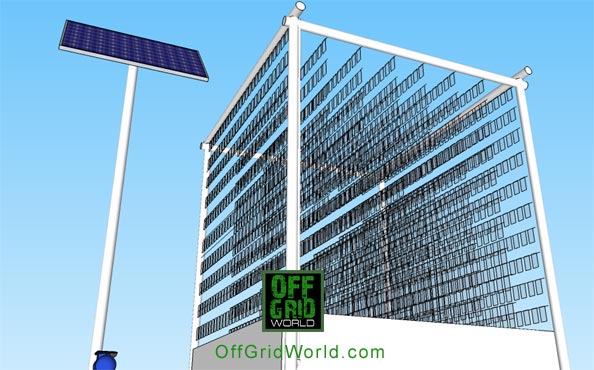
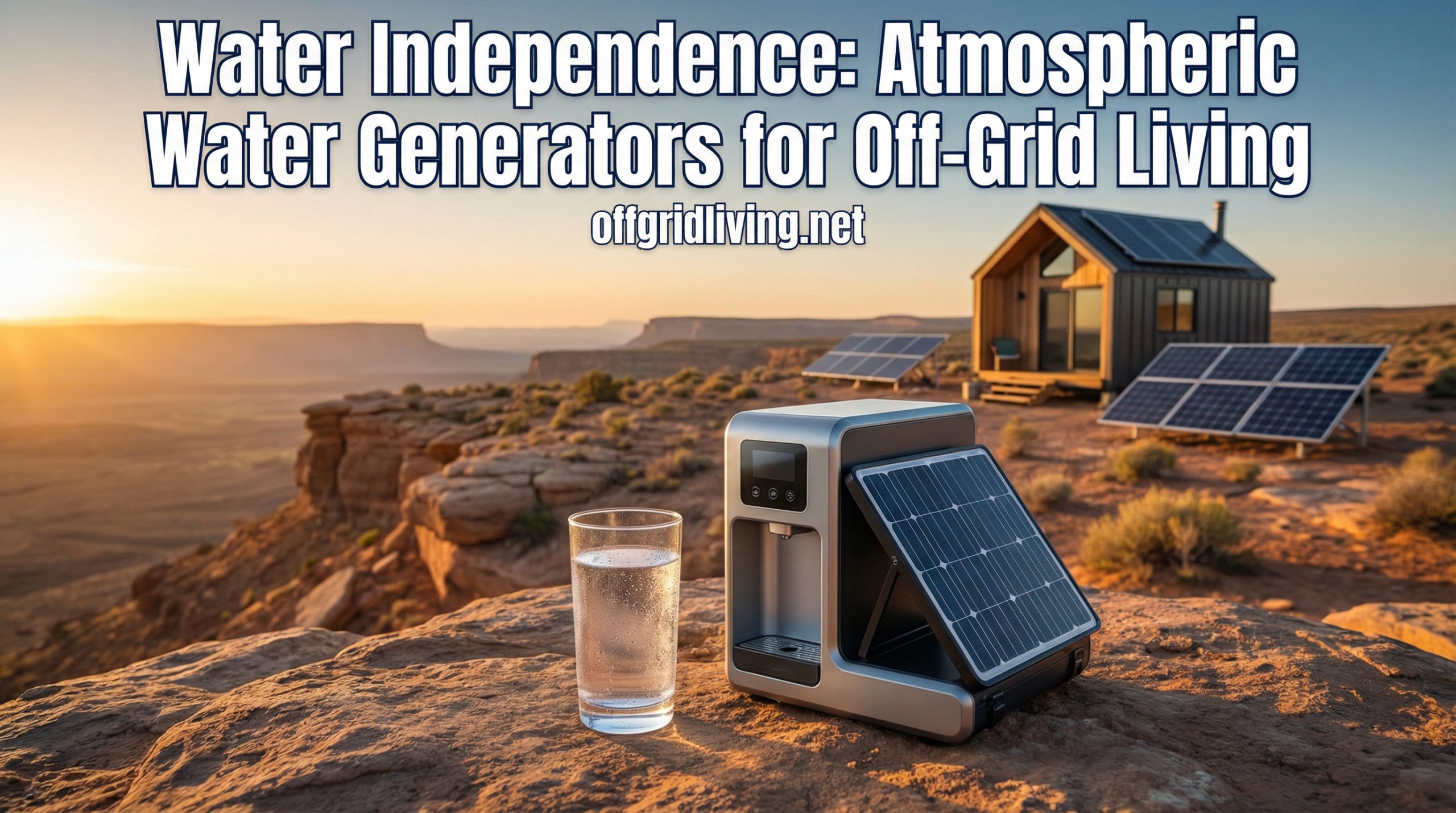
Atmospheric water generators pull clean, drinkable water directly from the air, allowing off-grid homes and cabins to achieve near-complete water independence. This article explores how AWGs work, why they’re perfect for off-grid living, the types available, real production numbers, best installation practices, maintenance needs, pros and cons, and whether AWGs alone can fully support an off-grid household.
1. What Is an Atmospheric Water Generator?
An Atmospheric Water Generator (AWG) is a device that extracts water vapor from the surrounding air and turns it into liquid water. The concept sounds futuristic—almost like science fiction—but the technology is both proven and steadily improving every year.
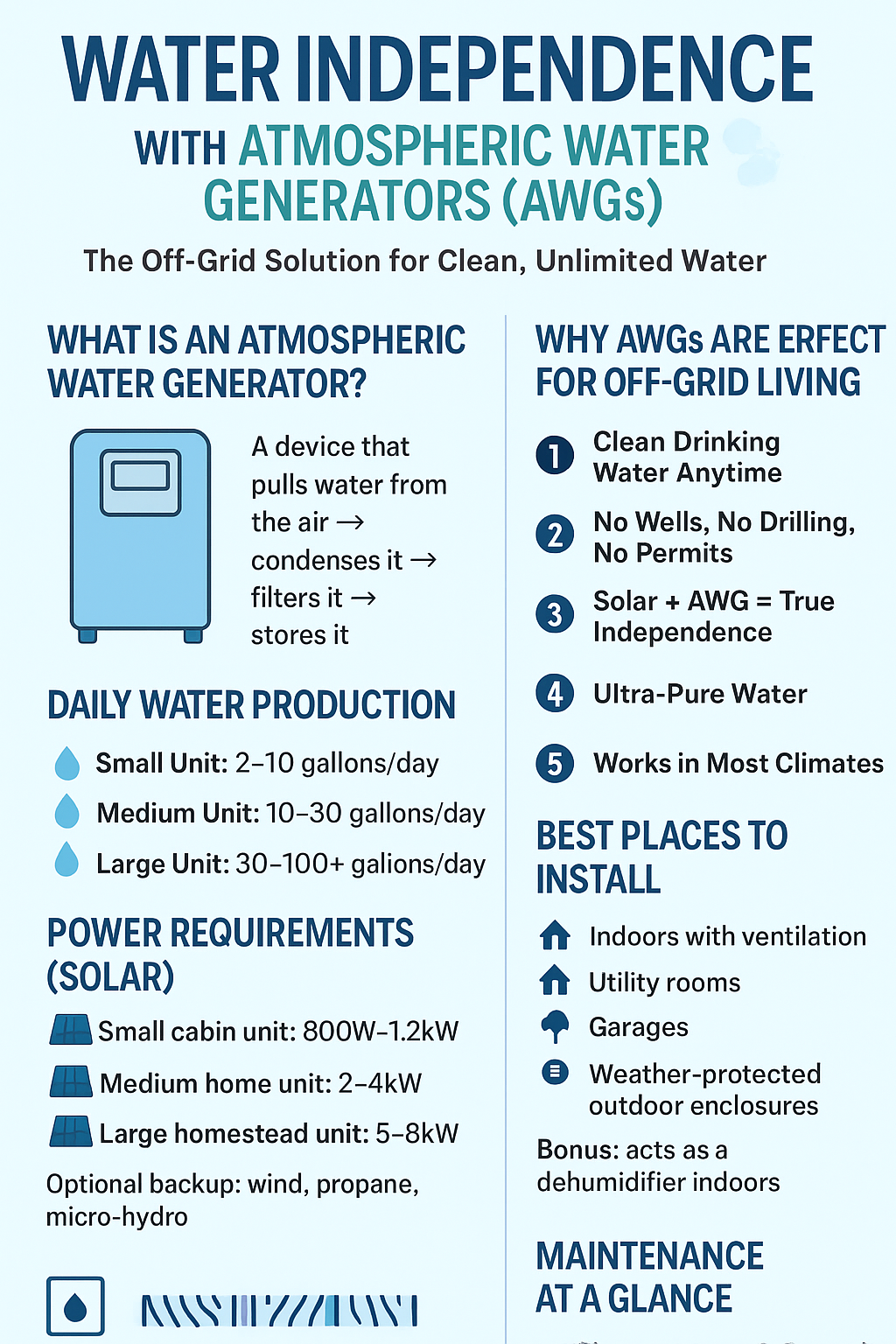
Every cubic meter of air around us contains water. An AWG captures that vapor, condenses it into liquid form, filters it, and stores it in a tank. The result is clean, potable water that meets (or exceeds) drinking water standards. Sump pump installation is also an important solution for managing excess water in basements and low-lying areas, helping protect properties from water damage.
There are two main categories:
A. Refrigeration-Based AWGs
These machines cool air below the dew point, causing condensation to form. This is similar to how water forms on the outside of a cold drink on a warm day.
B. Desiccant-Based AWGs
These use moisture-absorbing materials (like silica gel or salts) to pull humidity from the air. Then, heat is applied to release the collected water.
Refrigeration systems are more common for home and off-grid use, while desiccant systems excel in very dry climates.
2. Why AWGs Are Game-Changing for Off-Grid Living
Water independence is one of the final barriers to full off-grid autonomy. An AWG solves this by providing:
• A renewable, continuous source of clean water
You are no longer dependent on wells, rainfall, or outside delivery.
• Reduced environmental impact
No groundwater pumping, no plastic bottles, and no chemicals needed.
• High water purity
AWG output is naturally distilled, then filtered and remineralized.
• Great for remote locations
Homes in deserts, mountains, or forests can generate water without large infrastructure.
• Ideal backup during emergencies
Wildfires, droughts, or power outages can disrupt traditional water systems. AWGs keep producing as long as they have power.
For off-grid cabins with solar systems, AWGs represent a major milestone in becoming self-sufficient.
3. How Much Water Can an AWG Produce Off-Grid?
Water production depends on humidity, temperature, and power availability. Here are averages:
Small Home AWG (2–10 gallons/day)
Ideal for tiny homes, RVs, small cabins.
• Needs ~300–1000 watts solar array.
Medium/Home Unit (10–30 gallons/day)
Enough for drinking, cooking, and limited showers.
• Needs ~1.5–3 kW solar power.
Large Unit (30–100+ gallons/day)
Suitable for full-time households or homesteads with multiple people.
• Needs 3–8 kW solar array.
Humidity Requirement:
Most residential AWGs work best in 35–95% humidity.
Desiccant systems can work down to 10% humidity, but they require more energy.
Practical Example:
In a typical forest, coastal, or moderate climate, a mid-range AWG can easily produce 15–25 gallons/day, enough for a family’s drinking and cooking needs.
4. Powering an AWG in Off-Grid Conditions
AWGs use electricity, so solar is the most common power source for off-grid homes.
A. Solar + AWG
-
Solar panels run the AWG during the day
-
Excess energy charges batteries
-
Batteries run the AWG in the evening
Minimum Solar Recommended:
• Small cabin unit → 800W–1.2kW
• Medium family unit → 2–4kW
• High-output unit → 5–8kW
B. Hybrid Systems
For cloudy regions, AWGs can also run on:
-
Wind turbines
-
Propane generators
-
Micro-hydro systems
This hybrid approach ensures consistent water generation even during low sunlight.
5. Installing an AWG in an Off-Grid Home or Cabin
A. Indoor vs Outdoor Placement
Indoor:
✔ Stable temperature
✔ Protected from weather
✔ Doubles as dehumidifier
Outdoor:
✔ Saves indoor space
✔ Needs protective enclosure
Most AWGs thrive indoors because temperature control improves efficiency.
B. Ventilation Requirements
Units need good airflow. Recommended:
-
At least 2–3 feet of clearance
-
Dedicated ventilation grilles
-
Avoiding enclosed closets
C. Water Storage Integration
AWGs typically pair with:
-
Pressurized tanks
-
Gravity-fed tanks
-
Rainwater collection systems
Many off-grid homes combine AWG water with rainwater, creating a year-round supply.
D. Water Remineralization
Because AWG water is naturally distilled, it lacks minerals. Most machines:
-
Add minerals through cartridges
-
Balance pH automatically
-
Include UV sterilization for safety
This makes AWG water clean, safe, and great-tasting.
6. Maintenance Requirements
AWGs are low-maintenance compared to wells or pumps.
Typical Maintenance Tasks:
-
Air filters: Replace 1–3 months
-
Water filters: Replace 3–6 months
-
UV lamp: Replace yearly
-
Clean tanks: Every 6 months
-
Inspect coils/fans: Quick wipe-down monthly
There’s no drilling, no groundwater testing, no pump replacement, and no contamination risk from soil or bacteria.
7. Advantages of Using AWGs Off-Grid
1. True Water Independence
You’re no longer tied to environmental conditions or infrastructure.
2. Ultra-Pure Drinking Water
AWG output is cleaner than most municipal water systems.
3. Reliable Year-Round Production
Even in drought, humidity levels rarely hit zero.
4. Excellent Emergency Preparedness
AWGs continue producing water when wells fail or rainfall disappears.
5. Scalable
Add more units as your demand grows.
6. Suitable for Any Location
Works in forests, deserts, islands, mountains, and urban off-grid lots.
8. Challenges and Considerations
To be realistic, AWGs aren’t perfect. Off-grid owners should understand:
1. Power Requirements
AWGs consume more energy than a refrigerator or AC.
A strong solar setup is usually necessary.
2. Humidity Limits
In extremely dry regions (<20% humidity), production decreases unless using desiccant systems.
3. Upfront Cost
Costs range from $800–$10,000 depending on size and technology.
4. Not Always Suitable for Non-Drinking Water
For gardening, animal watering, or laundry, AWG water may be impractical if large volumes are needed. Pairing with rainwater catchment solves this.
5. Requires Regular Filter Replacement
To maintain purity, filters must be changed on schedule.
9. Best Climate Types for Off-Grid AWGs
Excellent Climates for AWGs
-
Coastal regions
-
Forested areas
-
Humid southern regions
-
Mountain valleys
-
Tropical climates
Moderate Climates
-
High desert (if humidity rises at night)
-
Midwestern plains
-
Certain dry northern zones
More Challenging Climates
-
Hot, extremely dry deserts (Arizona, Nevada, Sahara)
Use desiccant-based AWG + solar + rainwater combination.
10. Can AWGs Fully Replace Wells or Rainwater Systems?
Yes—and no. It depends on water usage.
AWG Alone Works For:
-
Drinking
-
Cooking
-
Washing dishes
-
Personal hygiene
-
Light bathing
AWG + Rainwater Combo Works For:
-
Showers
-
Laundry
-
Garden irrigation
-
Livestock
-
Large families
Most off-grid homes benefit from multiple water sources:
-
AWG for pure drinking water
-
Rainwater for bulk household needs
-
Well or hauled water for backup
This ensures total water redundancy.
11. Cost Analysis: Is an AWG Worth It?
Let’s compare AWG cost to a traditional well:
Well Installation Cost:
-
Drilling: $8,000–$25,000
-
Pumps, pipes: $3,000–$8,000
-
Testing & permits: $500–$2,000
-
Plus, wells can dry up, which is why timely Snohomish well pump repair can help protect your investment and reduce unexpected costs.
AWG Cost:
-
Small units: $800–$2,500
-
Medium units: $3,000–$6,500
-
Large units: $7,000–$10,000
-
Filters yearly: ~$150–$300
-
No drilling, no permits, minimal risk.
Over 10 years, AWGs often cost 30–50% less than wells for locations with difficult geology or deep aquifers.
12. Future of AWG Technology for Off-Grid Cabins
AWGs are advancing rapidly. Expect improvements in:
-
Efficiency (lower energy consumption)
-
Solar-built-in AWGs
-
Smart sensors & humidity optimization
-
Larger production at smaller footprints
-
Better desiccant systems for arid zones
Many experts predict AWGs will become standard equipment for off-grid homes within the next decade.
Conclusion: Water Independence Is Now Achievable
Atmospheric water generators are transforming off-grid living by making clean drinking water accessible anywhere—from deep forest cabins to isolated desert compounds. With modern AWG technology, off-grid homeowners no longer rely solely on wells, rainfall, or unreliable water deliveries.
By using solar power, combining AWGs with rainwater catchment, and properly maintaining the system, an off-grid household can achieve full water independence with minimal ongoing cost and maximum peace of mind.
In a world where water scarcity is becoming more common, AWGs are one of the most powerful tools for building a safe, resilient, sustainable off-grid lifestyle.