
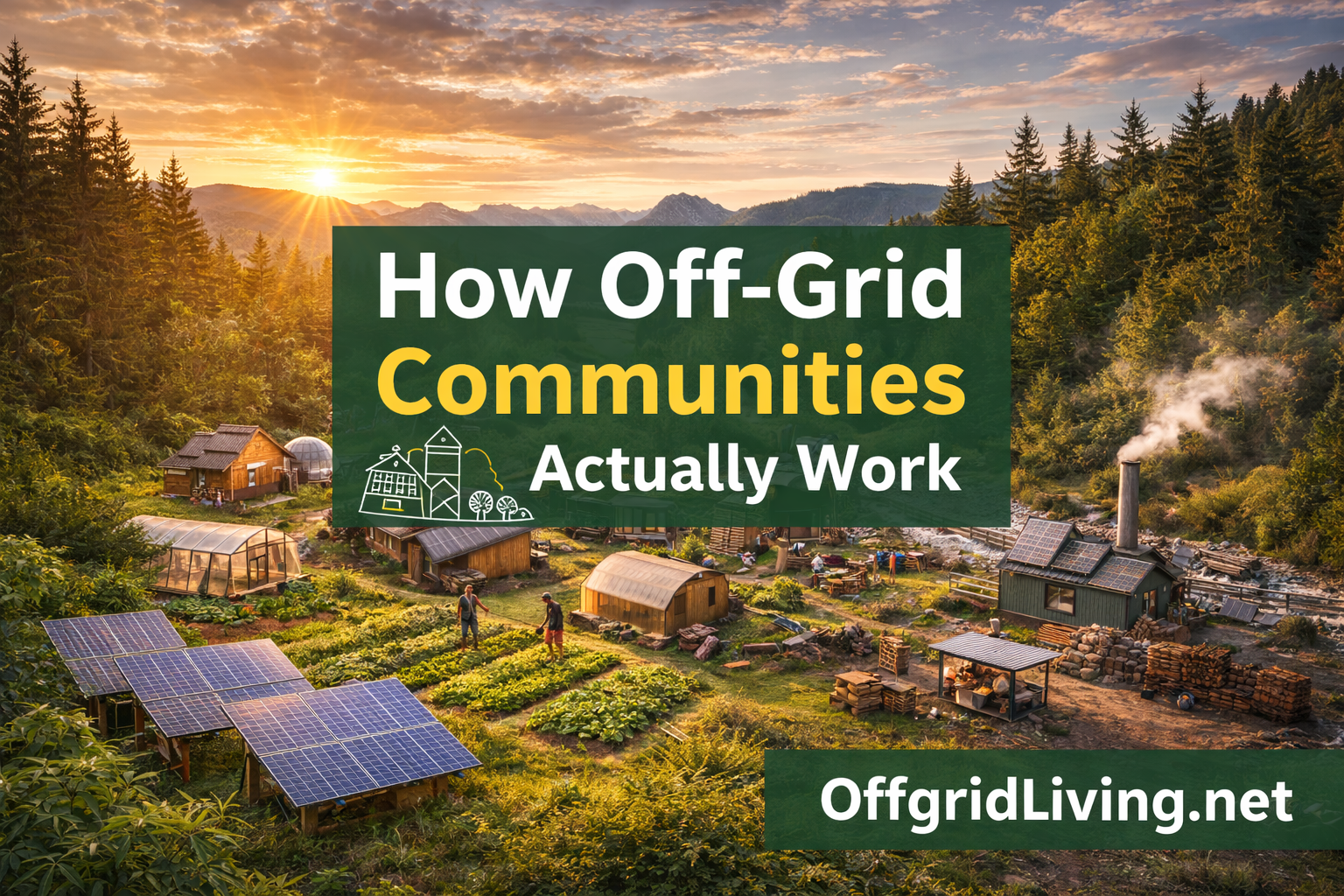
The idea of an off-grid community often sparks curiosity.
A place where people live independently from traditional infrastructure.
Where energy is produced locally.
Food is grown nearby.
And neighbors rely on cooperation instead of centralized systems.
But how do these communities actually function on a daily basis?
Living off the grid is one thing.
Living off the grid with dozens — sometimes hundreds — of people requires planning, systems, and shared responsibility.
Let’s take a look at how off-grid communities really work behind the scenes.
Shared Energy Systems
One of the biggest challenges for any off-grid settlement is power.
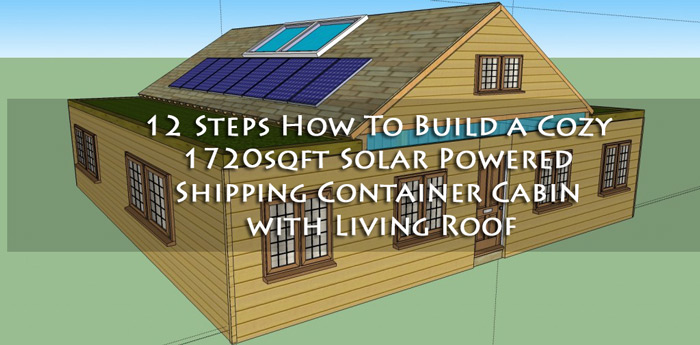
Instead of relying on a centralized electrical grid, most off-grid communities generate their own electricity through renewable sources.
The most common setup includes:
• Solar arrays
• Battery storage systems
• Backup generators
• Microgrid infrastructure
Rather than each household operating independently, many communities create a shared microgrid.
A microgrid is essentially a local power network that distributes electricity between homes, workshops, and shared facilities.
This allows communities to:
• Reduce costs by sharing infrastructure
• Increase reliability with larger battery systems
• Balance energy demand across households
For example, if one home uses more power at night while another produces excess solar during the day, the microgrid helps distribute that energy efficiently.
It’s a decentralized power system designed for resilience.
Water Independence
Water is another critical piece of the puzzle.
Most off-grid communities rely on a combination of systems to ensure a stable water supply.
These can include:
• Deep wells
• Rainwater harvesting systems
• Natural springs
• Water storage tanks
In many communities, water infrastructure is shared.
Large cisterns or reservoirs collect water that is then filtered and distributed to homes through gravity-fed or pump-driven systems.
Filtration usually involves several stages, including:
• Sediment filtration
• Carbon filters
• UV purification
This ensures water remains safe for drinking and household use.
Managing water responsibly becomes a shared priority, especially in dry climates where conservation is essential.
Growing Food Locally
Food production is often a core part of off-grid communities.
While not every resident farms full time, many communities operate cooperative growing systems.
These may include:
• Community gardens
• Small-scale farms
• Greenhouses
• Permaculture landscapes
• Shared orchards
Residents often contribute labor or skills in exchange for a share of the harvest.
This approach spreads responsibility while strengthening food security.
Some communities also raise livestock such as chickens, goats, or sheep, providing eggs, dairy, and meat.
The goal isn’t always complete self-sufficiency, but reducing reliance on distant supply chains.
Governance and Decision-Making
Running a community requires organization.
Most off-grid communities establish some form of governance structure to coordinate decisions and resolve disputes.
Common models include:
• Cooperative ownership structures
• Homeowner associations
• Consensus-based councils
• Community boards
Many intentional communities rely on consensus decision-making, where major decisions require broad agreement among members.
Others operate more like traditional neighborhoods with elected committees.
Typical topics handled by governance systems include:
• Land use planning
• Infrastructure maintenance
• Resource management
• Community guidelines
Clear rules help maintain harmony while preserving the independence that attracts people to off-grid living in the first place.
Shared Skills and Labor
One of the biggest strengths of off-grid communities is the diversity of skills within the group.
In a well-functioning community, residents often specialize in different areas.
For example:
• Electricians maintain solar systems
• Builders construct homes and repair structures
• Gardeners manage food production
• Mechanics maintain equipment
• Teachers educate children
Instead of every household mastering every skill, communities benefit from collective expertise.
This creates a resilient ecosystem where people support each other.
Barter and skill-sharing are also common, allowing residents to exchange services without relying solely on money.
Housing and Land Layout
Off-grid communities vary widely in how homes are built and organized.
Some resemble small villages with clustered homes and shared facilities.
Others spread houses across larger plots of land for greater privacy.
Homes may include:
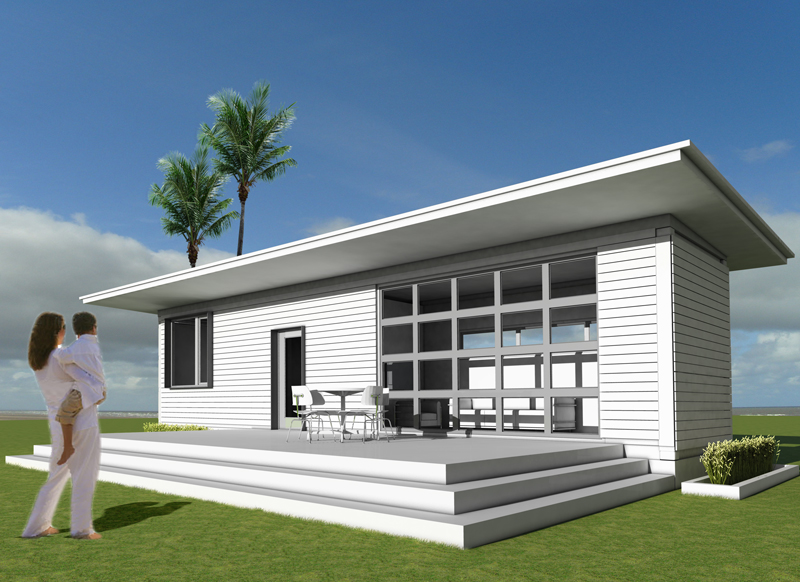
• Tiny houses
• Cabins
• Earthships
• Hempcrete structures
• Straw bale homes
Many communities encourage sustainable building methods that improve insulation and reduce energy demand. If you bought a parcel of land, you may need to schedule land clearing services to prepare the space for construction.
Shared spaces are also common, such as:
• Community kitchens
• Workshops
• Event spaces
• Tool libraries
These facilities help reduce duplication of resources and strengthen social bonds.
Internet and Communication
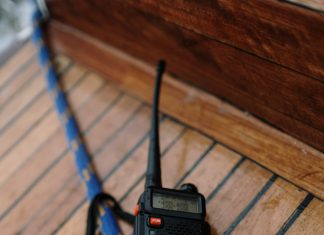
Despite the off-grid label, many communities still maintain modern communication tools.
Satellite internet and wireless broadband allow residents to stay connected while living independently.
Reliable internet access enables:
• Remote work opportunities
• Online education
• Digital communication with the outside world
This hybrid approach allows people to combine modern convenience with sustainable living.
The Real Benefit: Resilience
At their core, off-grid communities are designed for resilience.
By decentralizing energy, water, and food systems, these communities reduce dependence on fragile infrastructure.
But resilience isn’t just about technology.
It’s also about relationships.
When neighbors share knowledge, resources, and responsibilities, the entire community becomes stronger.
This collaborative model is what makes off-grid communities so compelling for people seeking a more sustainable way of life.
Looking Ahead
As interest in self-sufficient living grows, off-grid communities are likely to become more common.
Advances in solar technology, battery storage, water systems, and sustainable construction are making decentralized living more practical than ever before.
For many people, the appeal isn’t just independence.
It’s connection — to the land, to sustainable systems, and to a community built on cooperation.
And that may be the most powerful part of the off-grid lifestyle.