
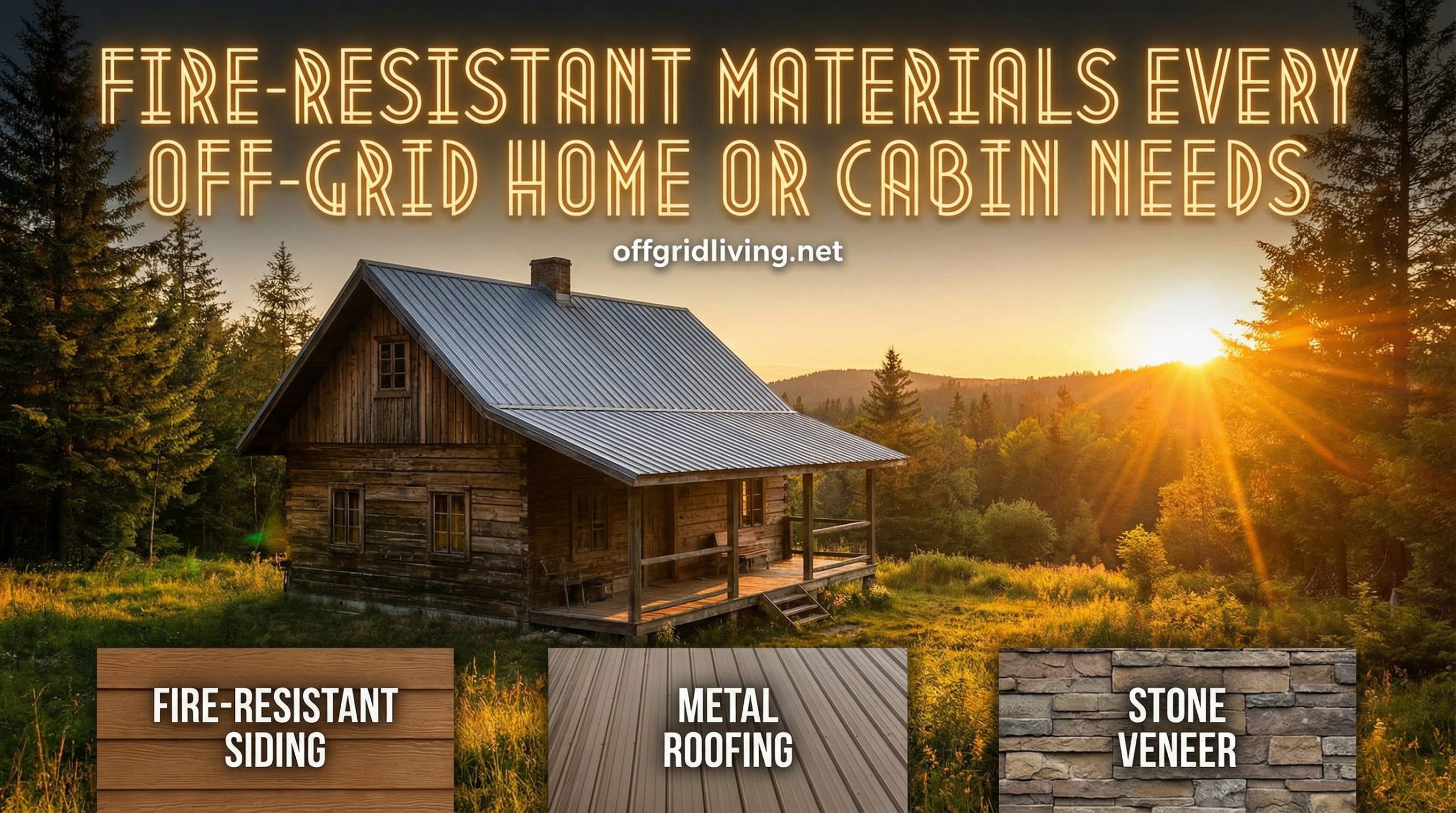
Living off the grid is a dream: independence, privacy, and total control over your home and energy. But it comes with responsibilities, and one of the most serious is wildfire risk. Remote homes are often far from emergency services, which means protecting your cabin with fire-resistant materials is critical.
The good news? Modern fire-resistant materials are durable, stylish, and surprisingly affordable. With smart planning, you can create a home that’s both cozy and resilient against flames.
Below, we’ll break down the top fire-resistant building materials for cabins, why they work, and how to incorporate them. Plus, we’ve included a practical checklist to guide your renovation or new-build project. Working with professional barn builders can also help you build a durable off-grid structure using high-quality materials.
1. Fiber Cement Siding: Durable and Low-Maintenance
Fiber cement siding is the ultimate all-rounder. Made from cement, sand, and cellulose fibers, it is:
-
Non-combustible: Won’t fuel flames.
-
Weather-resistant: Resists moisture, rot, and pests.
-
Aesthetic: Wood-like finishes for rustic cabin charm.
Why Off-Grid Homes Love It:
-
Low-maintenance: No frequent painting or sealing needed.
-
Insurance perks: Many providers offer discounts for fire-resistant siding. Read how good the home insurance in Ontario offered by eriemutual.com.
Tip: Choose lighter colors to reflect heat and reduce energy loads in solar-powered cabins.
2. Metal Roofing: Reflective and Fireproof
Metal roofing is no longer just for barns. Modern steel or aluminum roofs are:
-
Non-flammable: Embers bounce off instead of igniting.
-
Lightweight: Easier to install in remote areas.
-
Energy-efficient: Reflects heat, saving energy in solar-powered homes.
Style Options:
Metal roofing now comes in a variety of textures and colors, including panels that mimic traditional shingles, allowing your cabin to look rustic without sacrificing safety.
3. Tempered Glass Windows: Strength Meets Safety
Windows are vulnerable points in a wildfire. Regular glass can break and allow fire inside. Tempered glass offers:
-
High heat resistance
-
Shatter protection: Breaks into small, blunt pieces
-
Energy efficiency: Dual-pane options improve insulation
Off-Grid Tip: Keep large windows for natural light, but pair them with tempered or fire-rated glass to maintain safety.
4. Stucco: Lightweight, Flexible, Fire-Resistant
Stucco is a cement-based coating that works well for off-grid cabins because it’s:
-
Fire-resistant: Won’t ignite, slows fire spread
-
Lightweight: Ideal for uneven or elevated foundations
-
Customizable: Modern finishes suit rustic or contemporary cabins
Pro Tip: Can be applied over existing structures for an easy upgrade during renovations.
5. Concrete and Masonry: Timeless Fire Protection
Concrete and masonry are proven performers in fire-prone areas:
-
Non-combustible: Won’t burn or melt
-
Durable: Long-lasting, low maintenance
-
Versatile: Ideal for foundations, walls, chimneys, and firewalls
Historical Proof: Many buildings that survived urban fires were made of masonry, highlighting its effectiveness.
6. Ignition-Resistant Landscaping
Your cabin’s safety depends on its surroundings. Use:
-
Decking: Composite materials over wood
-
Fencing: Metal instead of cedar or pine
-
Patios & Paths: Stone, brick, or gravel
-
Vegetation: Fire-resistant plants, cleared brush zones
Off-Grid Tip: Maintain at least a 30-foot defensible zone around your home to slow wildfire spread.
7. Fire-Resistant Insulation: The Hidden Hero
Insulation is often overlooked in fire planning. Fire-resistant options include:
-
Mineral wool: Non-combustible, soundproofing benefits
-
Fiberglass: Resists flames and slows fire spread
Off-Grid Advantage: Improves thermal efficiency for solar-powered homes while adding an extra layer of fire protection, and fastfirewatchguards.com can provide professional fire watch services to further safeguard your property.
8. Additional Off-Grid Fire Safety Measures
Even with the right materials, other precautions are crucial for off-grid homes:
-
Water Access: Wells, ponds, or rainwater tanks can provide emergency firefighting resources.
-
Sprinkler Systems: Battery- or solar-powered sprinklers can protect your home automatically.
-
Defensible Space: Remove dead brush, maintain clear zones, and store firewood safely.
-
Emergency Plan: Solar-powered radios or satellite phones ensure communication in remote areas.
| Component | Recommended Materials | Benefits | Off-Grid Consideration |
|---|---|---|---|
| Siding / Exterior Walls | Fiber cement, Stucco, Masonry | Fire-resistant, low-maintenance, aesthetic | Minimal upkeep, durable in remote locations |
| Roofing | Metal roofing (steel or aluminum) | Non-flammable, reflective, long-lasting | Lightweight and easy to install in off-grid areas |
| Windows | Tempered glass, dual-pane options | High heat resistance, shatter protection | Maintains natural light while keeping flames out |
| Insulation | Mineral wool, fiberglass | Slows fire spread, energy-efficient | Helps regulate temperature in solar-powered homes |
| Decking / Outdoor Structures | Composite decking, metal fencing, stone patios | Reduces fire fuel, durable | Low maintenance for remote cabins |
| Landscaping / Vegetation | Fire-resistant plants, gravel, cleared zones | Reduces wildfire risk around property | Defensible space improves safety and access for firefighting |
| Chimneys / Firewalls | Masonry, concrete | Prevents fire spread inside home | Essential for wood-burning cabins |
Bottom Line: Combining Materials and Planning
Living off the grid gives you freedom, but it also requires planning and preparation. Using fire-resistant materials is a proactive step that not only protects your cabin but also ensures peace of mind in wildfire-prone areas.
Key Takeaways:
-
Fiber cement siding and metal roofing are fireproof and low-maintenance.
-
Tempered glass windows and modern stucco add protection without compromising aesthetics.
-
Masonry and concrete provide long-term durability and fire resistance.
-
Fire-resistant landscaping and defensible space reduce wildfire spread.
-
Fire-rated insulation adds hidden protection while improving energy efficiency.
By combining the right materials with smart off-grid practices like water access, sprinkler systems, and emergency planning, you can create a cabin that is both resilient and comfortable. It is crucial that you discuss with your general contractor all of your concerns and how to address them without compromising the aesthetic appeal of your home.
Remember: fireproofing isn’t about fear—it’s about empowerment. It lets you enjoy your off-grid retreat with confidence, knowing your home is protected from flames and ready for whatever nature throws your way.