
In the world of off-grid living, every resource matters.
Water independence.
Energy resilience.
Food security.
Building materials.
But what if one single crop could support all four?
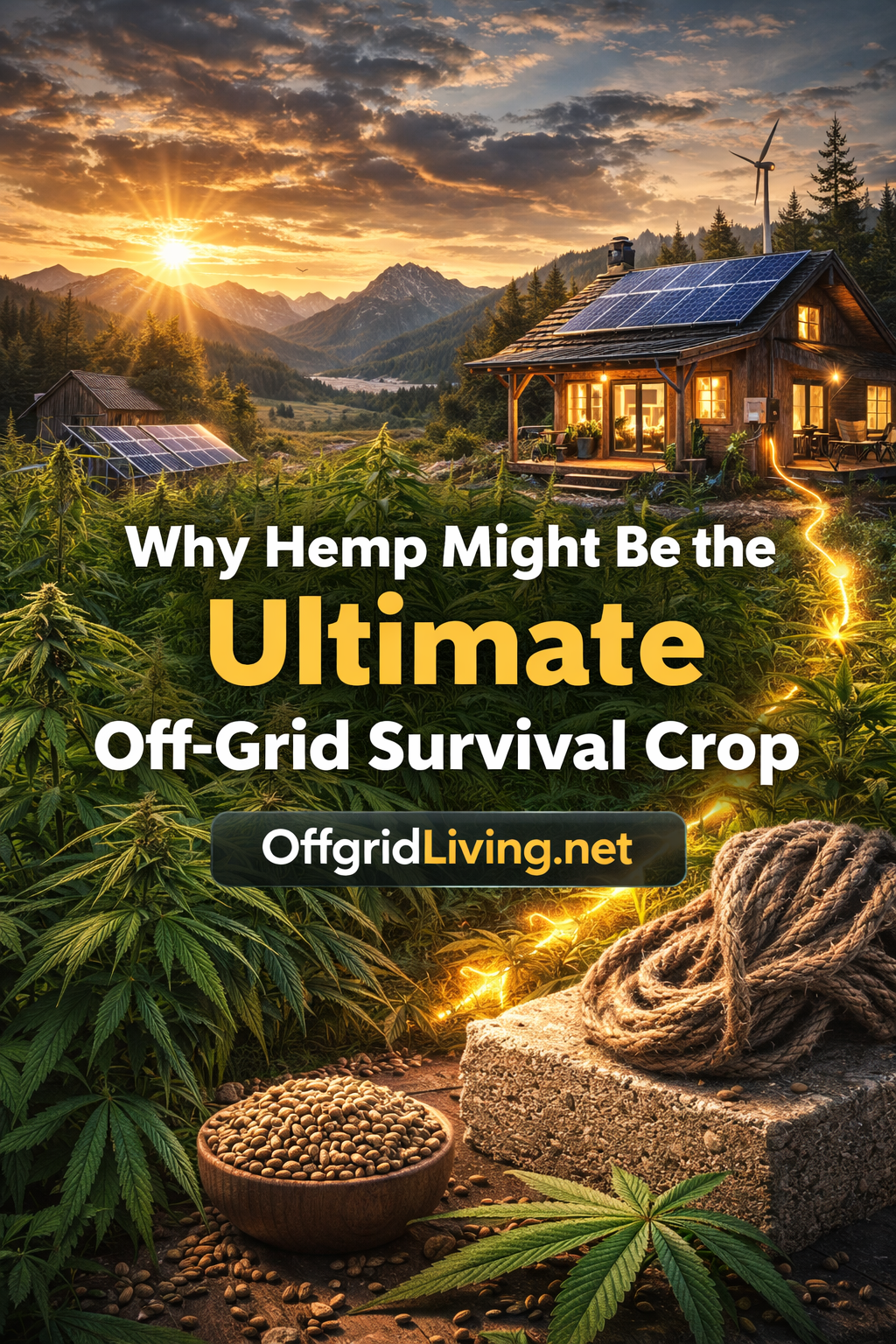
In 2026, as more people move toward self-sufficiency and decentralized living, hemp is quietly re-emerging as one of the most powerful survival crops available.
Not for hype.
Not for trends.
But for raw utility.
Let’s break down why hemp might be the ultimate off-grid survival plant.
🌱 One Plant. Multiple Uses.
Most crops serve one purpose.
Corn feeds you.
Cotton clothes you.
Trees build your home.
Hemp does all of it.
From a single harvest, hemp can provide:
-
High-protein seeds for food
-
Oil for cooking or fuel
-
Fiber for rope, textiles, and insulation
-
Biomass for soil regeneration
-
Material for hempcrete building
That kind of versatility is rare.
In a long-term resilience mindset, multi-use plants are king.
🥗 Food Security from Hemp Seeds
Hemp seeds are nutrient-dense and shelf-stable.
They contain:
-
Complete plant protein
-
Omega-3 and Omega-6 fatty acids
-
Fiber
-
Essential minerals
Unlike many crops that require extensive processing, hemp seeds can be eaten raw, roasted, or pressed into oil.
For off-grid homesteaders, this means:
A renewable source of calories and healthy fats
without depending on external supply chains.
🏗 Hemp as a Building Material
One of hemp’s most powerful applications is construction.
Hempcrete — made from hemp hurd and lime — creates:
-
Fire-resistant walls
-
Mold-resistant structures
-
Insulated thermal mass
-
Breathable building envelopes
For off-grid builders, that means:
Lower heating and cooling costs
Natural materials
Reduced environmental impact
While hempcrete isn’t load-bearing on its own, it pairs well with timber framing.
In resilience planning, fire resistance alone makes it worth attention.
🪢 Fiber for Tools and Textiles
Historically, hemp was used to make:
-
Rope
-
Sailcloth
-
Canvas
-
Workwear
Hemp fiber is incredibly strong and naturally resistant to rot.
For preppers and off-grid dwellers, that means:
Durable cordage
Repairable gear
Long-lasting fabric
In a world where supply chains are uncertain, the ability to produce your own fiber has serious value.
🌾 Soil Regeneration and Sustainability
Hemp is also a regenerative crop.
It:
-
Grows quickly
-
Suppresses weeds naturally
-
Improves soil structure
-
Requires fewer pesticides than many crops
For land management, hemp can be part of a rotation system that strengthens your soil rather than depletes it.
Healthy soil equals long-term food security.
🔥 Biomass and Fuel Potential
Hemp produces large amounts of biomass.
That biomass can be used for:
-
Mulch
-
Compost
-
Biofuel research applications
-
Animal bedding
While hemp isn’t a direct replacement for firewood, its byproducts contribute to a closed-loop system on a homestead.
⚖ What About Legality?
Industrial hemp is federally legal in the United States under the 2018 Farm Bill, as long as THC levels remain below 0.3 percent.
However, cultivation rules vary by state.
Before planting hemp, you must:
-
Check local regulations
-
Obtain required permits
-
Understand testing requirements
For off-grid landowners, compliance is essential.
🌄 Why It Fits the Off-Grid Philosophy
Off-grid living is about reducing dependence.
Hemp aligns with that philosophy because it offers:
Food
Fiber
Building material
Soil improvement
From a single crop.
Few plants offer that level of self-reliance potential.
It’s not about hype.
It’s about optionality.
And in survival planning, optionality is power.
🧠 Is Hemp Truly the Ultimate Survival Crop?
No plant solves everything.
But hemp ranks high because it checks multiple resilience boxes at once.
For those building long-term independence, it’s worth serious consideration.
Energy independence matters.
Water independence matters.
But agricultural independence may matter most.
And hemp just might be one of the strongest tools in that strategy.